
Did you know that over 70% of patients receiving non-invasive treatments for tendon injuries report noticeable pain relief within a few weeks? With growing interest, shock wave therapy is emerging as an effective option for chronic pain and soft-tissue conditions — offering a non-surgical route to healing.
What Is Shock Wave Therapy?
Shock wave therapy (SWT) — sometimes called extracorporeal shock wave therapy (ESWT) — uses high-energy sound waves to stimulate healing in injured tissues. Rather than surgery or long-term medication, SWT delivers acoustic pulses from outside the body, focused on the affected area. Because of this, it’s considered minimally invasive, generally safe, and often performed in outpatient settings.
The Science Behind the Sound Waves
A handheld applicator generates acoustic waves, which travel through the skin and soft tissue.
As the waves reach the targeted site (e.g., tendon, muscle, or bone), they produce microtrauma — tiny controlled damage.
The body reacts by triggering a natural healing response: increased blood flow, release of growth factors, and tissue regeneration.
Over time, the tissue remodels, inflammation reduces, and pain often subsides.
What Conditions Can Benefit from SWT?
Shock wave therapy is used for a range of chronic and acute musculoskeletal conditions, including:
Plantar fasciitis and heel spurs
Rotator cuff injuries and shoulder pain
Tennis elbow and golfer’s elbow
Achilles tendonitis
Patellar tendonitis (jumper’s knee)
Chronic muscle pain and trigger points
Non-healing fractures or delayed bone repair
Because SWT stimulates natural healing and reduces inflammation, it can be particularly effective when conventional treatments (rest, physiotherapy, medication) have had limited success.
Why Patients and Clinicians Choose SWT
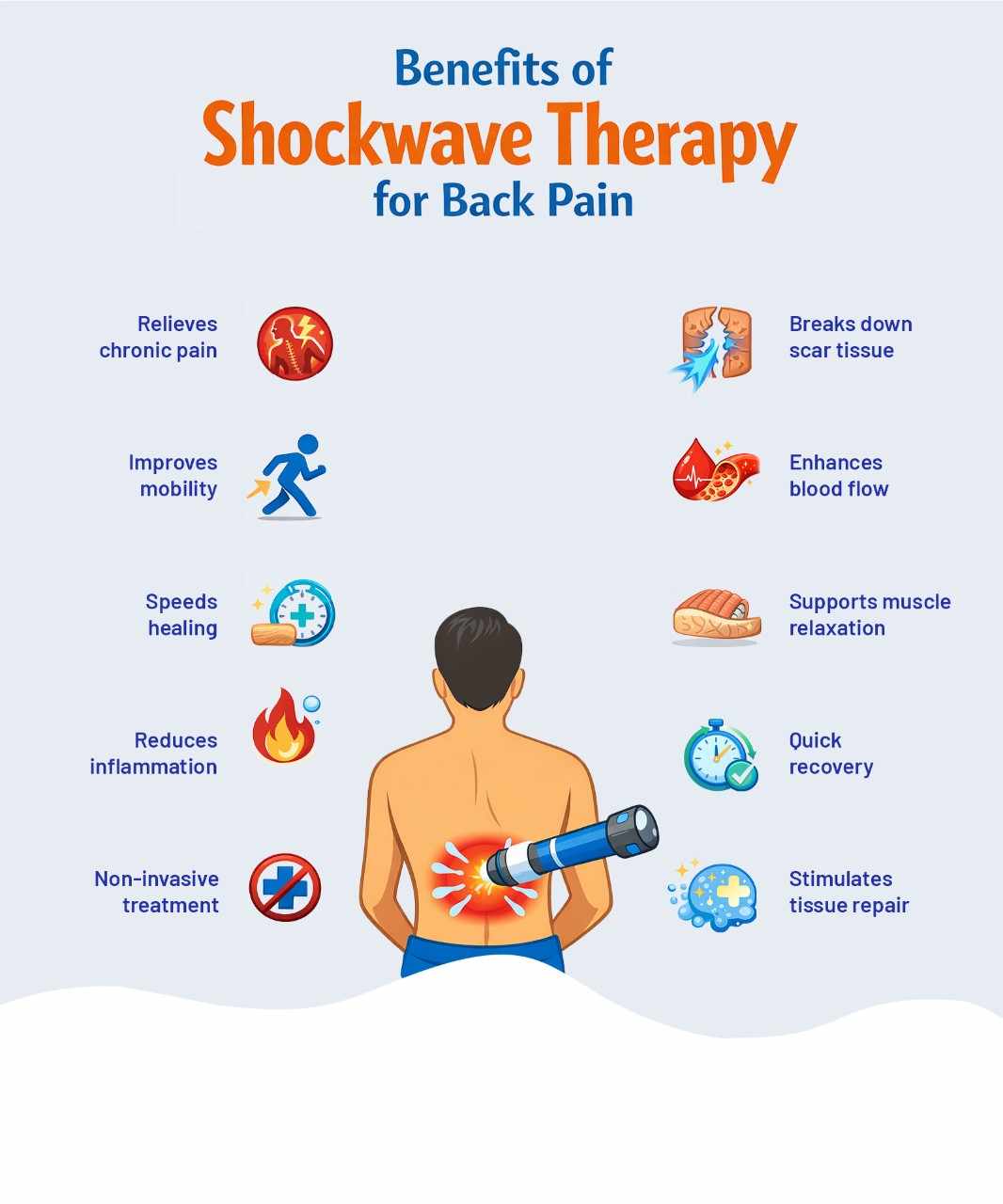
Benefit Explanation Non-invasive No cuts, stitches, or hospital stays — treatment happens outside the body. Minimal downtime Many people return to normal activity soon after or even the same day. Accelerated healing The therapy can speed up blood flow and tissue repair, potentially shortening recovery. Pain relief and mobility improvement Reduction in pain and improved function often follow over several weeks. Reduced reliance on medications/surgery Offers an alternative to long-term painkillers or surgical intervention.
What to Expect During a Session
A clinician marks the treatment area and applies a coupling gel.
The applicator is placed against your skin, and a series of pulses — often 1,000 to 2,500 — are delivered over a few minutes.
You might feel tapping, tingling, or mild discomfort, but not sharp pain.
Sessions usually take 5–15 minutes; most patients need 3–5 sessions spaced one to two weeks apart.
Are There Risks or Side Effects?
Shock wave therapy is generally safe when administered by a qualified provider. Some potential — usually mild — side effects can include:
Temporary redness, swelling, or bruising at the treatment site
Mild discomfort during or after the session
Temporary numbness or tingling in rare cases
Because SWT promotes tissue repair via controlled microtrauma, it’s important that the therapy is targeted accurately. Individuals with certain conditions (e.g., blood clotting disorders, pregnancy, active cancer at the treatment site) should discuss risks thoroughly with a clinician.
Who Should Consider Shock Wave Therapy — and When?
Shock wave therapy may be a good option if:
You have chronic tendon or soft-tissue pain that hasn’t improved with rest or physiotherapy.
You wish to avoid surgery or long-term medication use.
You prefer a relatively quick, outpatient treatment with minimal downtime.
It may be less suitable if you are managing acute injury requiring immobilization, or if you have health conditions that contraindicate the procedure.
FAQs
Q: How long does it take to see results from shock wave therapy?
A: Most patients notice some pain relief or improved mobility within 3–6 weeks after therapy begins. Full benefits often show after 6–12 weeks, sometimes sooner depending on the condition and healing capacity.
Q: Is shock wave therapy painful or uncomfortable?
A: During the session, you may feel a tapping or slight discomfort, but it’s generally tolerable. Any discomfort typically subsides quickly, and many people resume normal activities shortly after treatment.
Important Considerations
Always seek treatment from a qualified and experienced clinician who understands the correct protocols for shock wave therapy.
Combine SWT with complementary care (e.g., physiotherapy, stretching, strengthening) for best outcomes.
While SWT is supported by growing clinical evidence, individual responses can vary — healing depends on factors like age, overall health, and adherence to post-therapy guidance.
Conclusion: A Non-Surgical Path to Recovery
Shock wave therapy presents a promising way to manage chronic tendon and soft-tissue conditions — stimulating the body’s own repair mechanisms with minimal risk and downtime. Whether you’ve struggled with persistent pain in your heel, shoulder, or knee, SWT can offer an effective, non-surgical route to relief and regeneration. If you’re considering it, consult a qualified clinician to explore whether shock wave therapy fits your needs — and take a step toward renewed mobility and comfort.

Write a comment ...